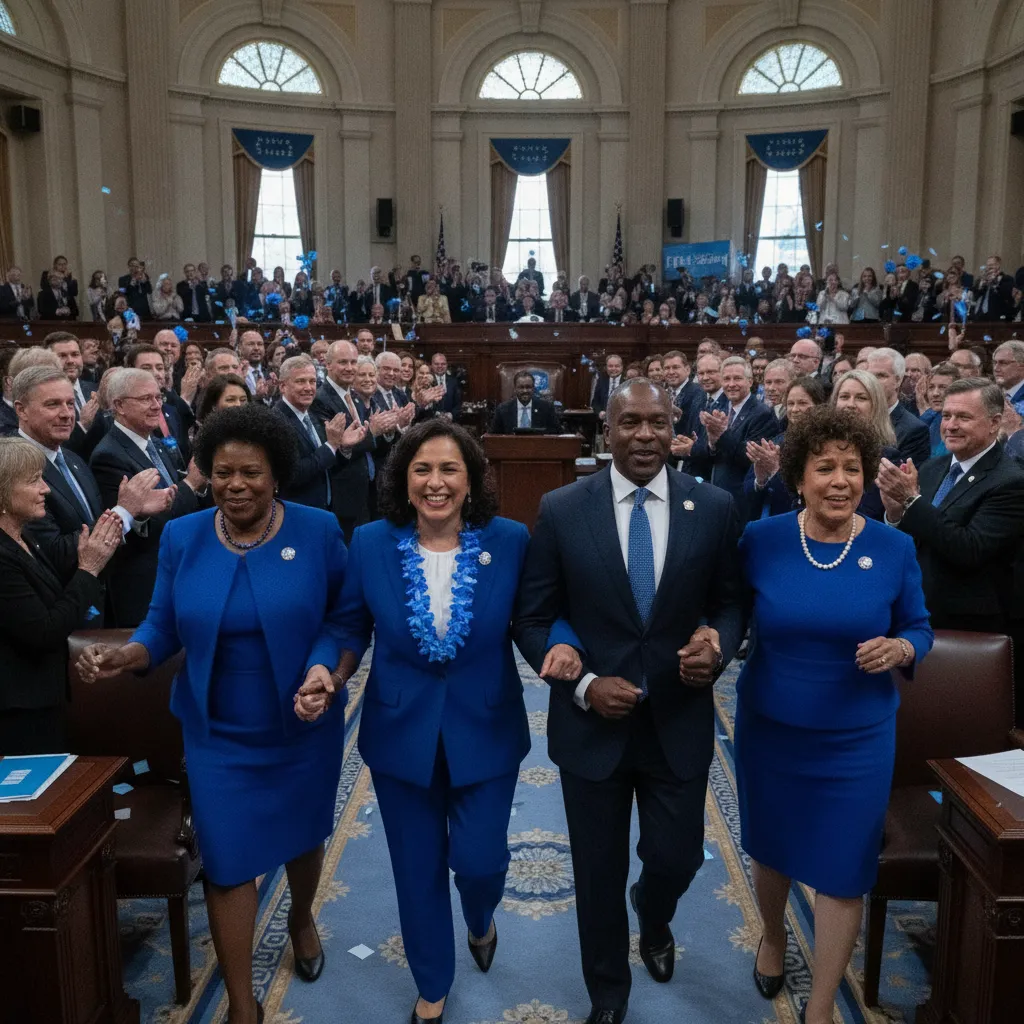
In a resounding shift of political power, Democrats have seized control of both the House and the Senate, marking a historic victory that creates a formidable legislative check on President Donald Trump during his final two years in office. The sweeping result appears to be a direct reflection of the president’s current standing with voters, as Democratic candidates successfully flipped key seats across the country to secure commanding majorities in Washington.
Among the most symbolic victories of the night is that of Abdul El-Sayed, who is projected to win the Michigan Senate seat. Upon taking office, El-Sayed will make history as the first Muslim senator ever to serve in the United States Senate. His victory was part of a larger surge for his party, which saw successful flips in several other high-profile states including Texas, North Carolina, Ohio, Iowa, South Carolina, Maine, and Kansas. One of the evening’s biggest shocks came from Texas, where Democrat James Talarico defeated Attorney General Ken Paxton despite a strong endorsement from the president.
President Trump responded to the losses with a mix of concession and defiance. While he told The New York Times that he is willing to accept the results and looks forward to working with congressional Democrats, he maintained that the electoral defeat was not a personal referendum on his leadership. Speaking with Fox News, Trump insisted that his administration oversaw some of the greatest achievements in presidential history regarding the economy and suggested that external factors, such as tensions involving Iran, played a role in the Republican slump.
Beyond the federal races, the map showed a complex divide between national trends and local preferences. While Arizona Governor Katie Hobbs secured her reelection by leveraging criticisms of her opponent’s ties to election denialism, Republicans managed to hold ground elsewhere. In Nebraska and Vermont, GOP governors Jim Pillen and Phil Scott comfortably retained their seats, proving that certain regional figures remain insulated from the broader national swing toward Democrats.